Healthcare has been a domain where I see AI having a significant impact.
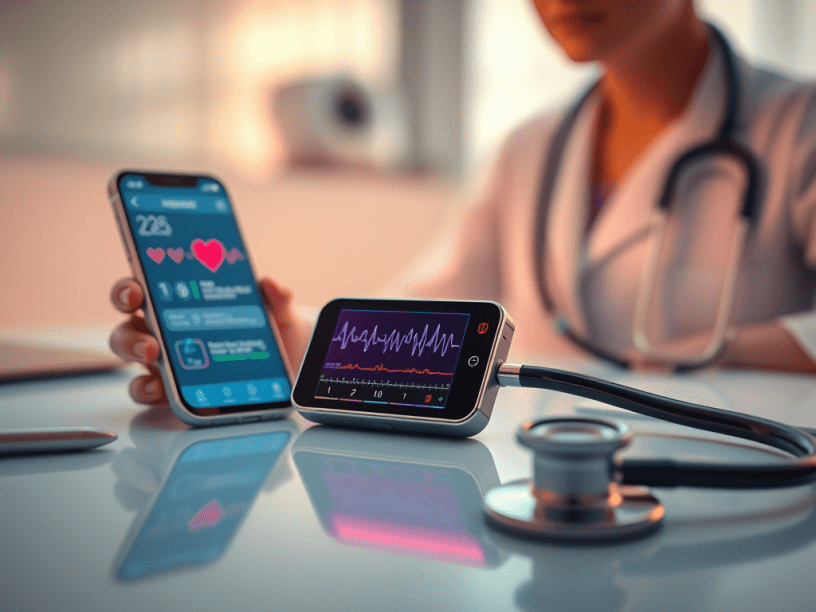
An AI stethoscope the size of a playing card is now being tested in the UK. In just 15 seconds, it analyzes heart sounds and ECG signals and flags risks like heart failure, valve disease and atrial fibrillation. In large-scale trials with over 12,000 patients, it helped doctors detect these conditions 2 to 3 times more often than traditional checks.
What makes it interesting is the technical design, where we combine AI in Edge and in cloud:
💠 Signal capture: Sensors in the device pick up heart sounds and electrical activity.
💠 Edge processing: Lightweight preprocessing happens on the device to clean noise.
💠 Secure cloud pipeline: The data is encrypted and sent to cloud servers where trained AI models run the analysis.
💠 Model architecture: A hybrid approach combining audio deep learning (for murmur and rhythm analysis) with ECG pattern recognition.
💠 Output: Results are sent back to a GP’s phone app in seconds with clear visual indicators for risk.
As you can see the device does not have a bulky hardware or complicated setup. It also does not disrupt the current GP workflow.
One of the key issues that is currently being addressed is the relatively high “False positives” and not every clinic stuck with it after the pilot. But i see this as a part of any first-generation product.
With better models, tighter integration into electronic health records, and edge inference to reduce cloud dependence, this can become a permanent tool in everyday practice.
Looking ahead, I am positive that the same architecture can be extended beyond heart conditions into lung health, kidney monitoring or even metabolic markers.
I see a pattern that is emerging: medical devices are being rebuilt as AI-first products, blending sensors, edge compute, and cloud intelligence.
Transforming Healthcare: AI-Enabled Cardiac Monitoring
 Vignesh Kumar