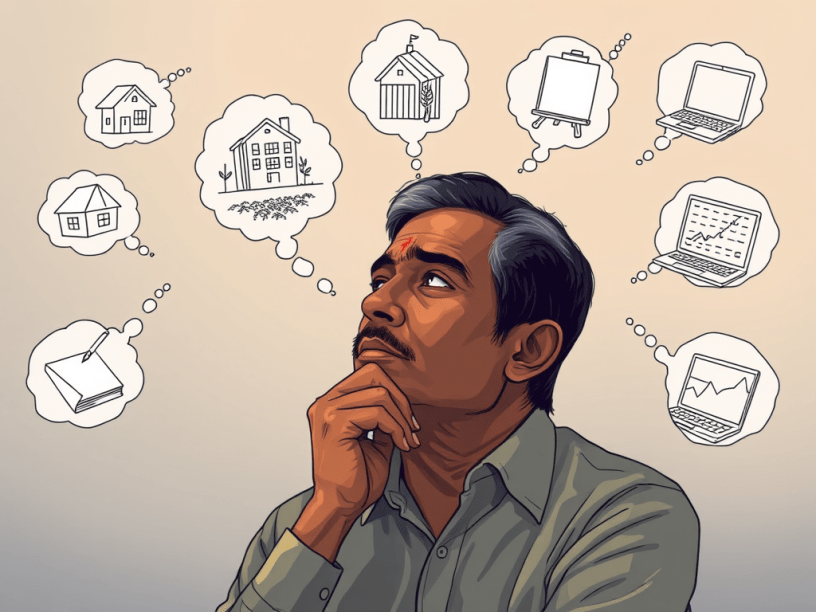
In many of my posts on Financial Independence, I have always emphasized that my focus is on independence, not retiring early. Yet, I often get questions about the second part—What will you do after retiring early? Will your standard of living drop even after achieving financial independence?
To answer this, I ran a 3-month experiment—I stopped relying on my monthly income and tried living only on my savings. And what a learning experience it was!
Here’s what I realized very quickly:
- The earlier you reach financial independence, the more pressure you feel to stretch your savings.
- If you’re in your early 40s, you still have many milestones ahead—kids’ education, family expenses, lifestyle needs.
- Without a regular income, I started questioning every expense—even small family purchases. I became so cautious that I almost frustrated my family with my frugality!
That’s when I truly understood the importance of alternate sources of income.
If you plan to take a break after financial independence, make sure you have new income streams in place. I would have felt much more at ease if I had some cash flowing in to mimic my job income.
Here’s what you can do:
✔ Rental income – Invest in real estate that generates passive income.
✔ Monetize a hobby – Teach, write, or create something valuable.
✔ Side gigs – Use your skills to freelance or consult.
✔ Farming – Grow high-value crops like avocados, ginger, or pepper that generate seasonal income.
✔ Investing – Generate returns through dividends, bonds, or other passive investments.
✔ Digital products – Create e-books, online courses, or templates that sell passively.
Financial independence is not about leading a slow, retired life. It’s about having the freedom to do what truly matters to you—without constantly worrying about money.
If you are on this journey, I would highly recommend you think about alternate income streams
 Vignesh Kumar