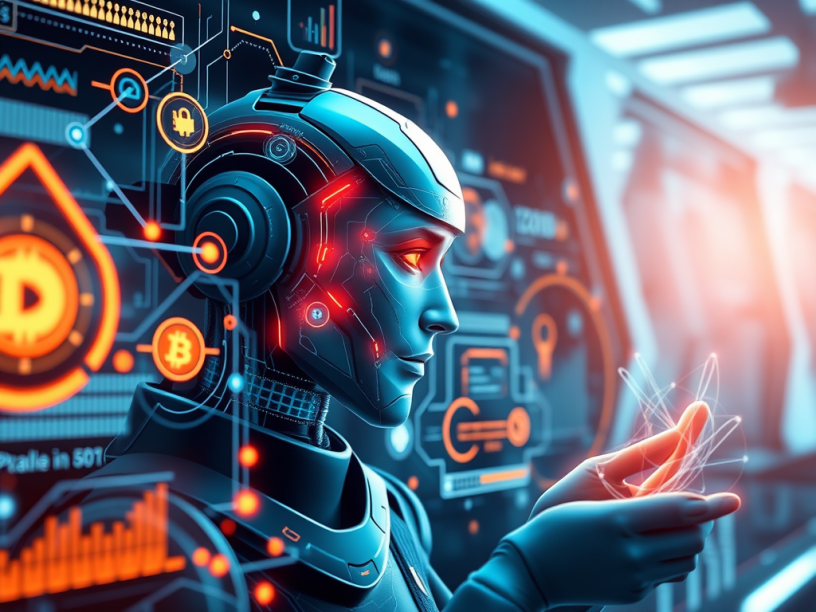
Recently combining AI and blockchain has become one of the most exciting trends in tech. AI agents are stepping into the crypto space, changing how transactions and interactions happen.
📍 Automation: AI agents, powered by artificial intelligence, act like smart contracts on the blockchain. They can manage crypto wallets, sign keys, and even execute transactions without constant human involvement.
📍 Efficiency: On trading platforms, AI agents analyze huge amounts of data to identify market trends, execute trades quickly, and strengthen fraud detection.
📍 No Middlemen: In crypto payments, AI agents optimize transactions by removing traditional payment systems’ regulatory barriers, making them faster and more seamless.
While AI agents are transforming blockchain, we need to remain vigilant for a few key reasons:
1️⃣ Security Risks: AI agents operate autonomously, but if they’re compromised or manipulated, the impact could be severe. For example:
▪️ If an AI agent managing a crypto wallet misinterprets instructions or gets hacked, it could execute unauthorized transactions.
▪️ Similarly, a trading agent might trigger trades based on fake data, leading to financial losses.
This is why human oversight and strong security measures are essential to monitor AI agent activities and correct errors before they escalate.
2️⃣ Trust and Validation:AI agents rely on data to make decisions, but what if the data is flawed or biased? For instance, an AI agent tasked with detecting fraud might flag legitimate transactions due to incorrect patterns in its training data. Humans play a critical role in validating these decisions to ensure reliability and fairness.
3️⃣ Ethics and Compliance:
Crypto operates in a decentralized space, but it’s still subject to global regulations. AI agents must adhere to compliance standards like anti-money laundering (AML) rules. For example, an agent that overlooks AML protocols could unintentionally allow illicit transactions, exposing platforms to legal risks.
4️⃣ Scalability and Autonomy:
While AI agents are designed to automate processes, full autonomy remains a challenge. For example:
▪️ An agent might pause a transaction if it encounters an unusual scenario it hasn’t been trained for, delaying operations.
What next: Imagine a crypto payment agent in an e-commerce setup. The AI can manage thousands of transactions in real-time, but if there’s an unusual transaction (like a sudden spike in value), the system might pause and alert a human to verify it. This combination of automation and vigilance ensures security while keeping things efficient.
AI agents hold immense potential to make blockchain faster, smarter, and more secure, but their success depends on responsible deployment.
🚀 How AI Agents Are Transforming Blockchain and Crypto Payments
 Vignesh Kumar